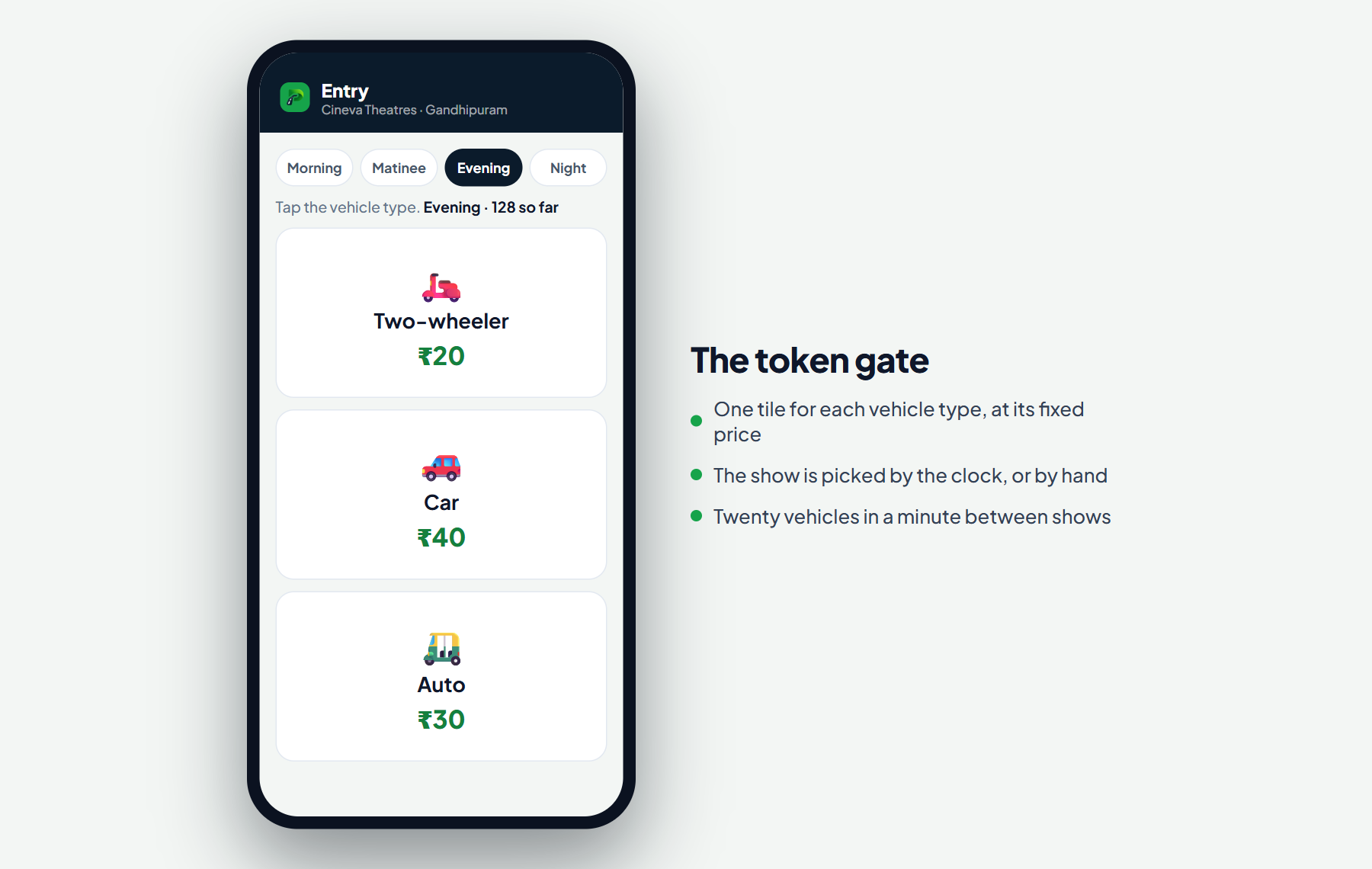
The token gate
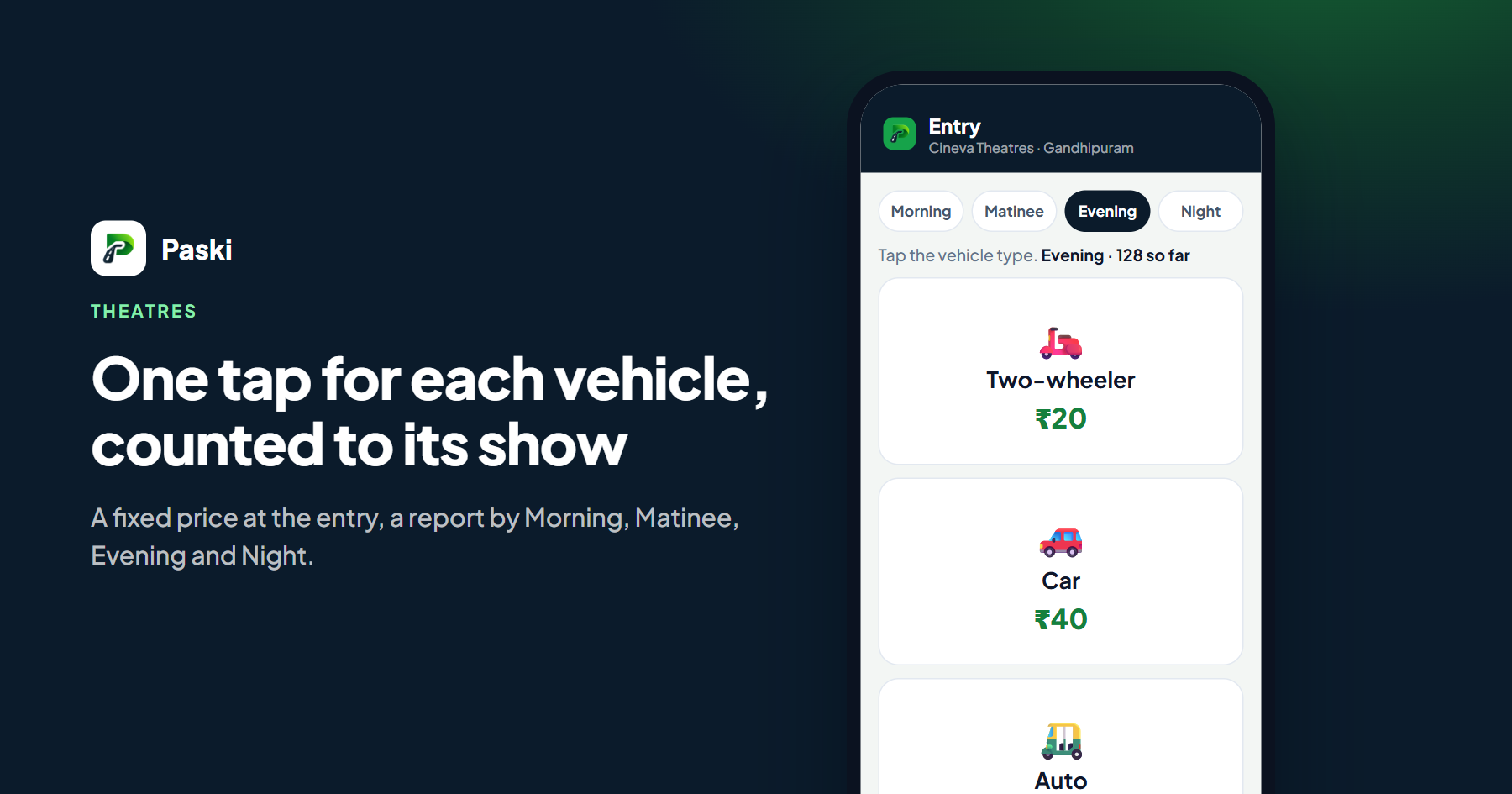
At a theatre the entry screen is a row of large tiles, one for each vehicle type: Two-wheeler, Car, Auto, whatever the parking takes. The attendant taps the tile and the ticket is issued, paid, at the fixed price of that type. There is no number plate to type and no way out to record, because a token gate does not track exits. It is the fastest entry Paski has: twenty vehicles in a minute between shows is ordinary.
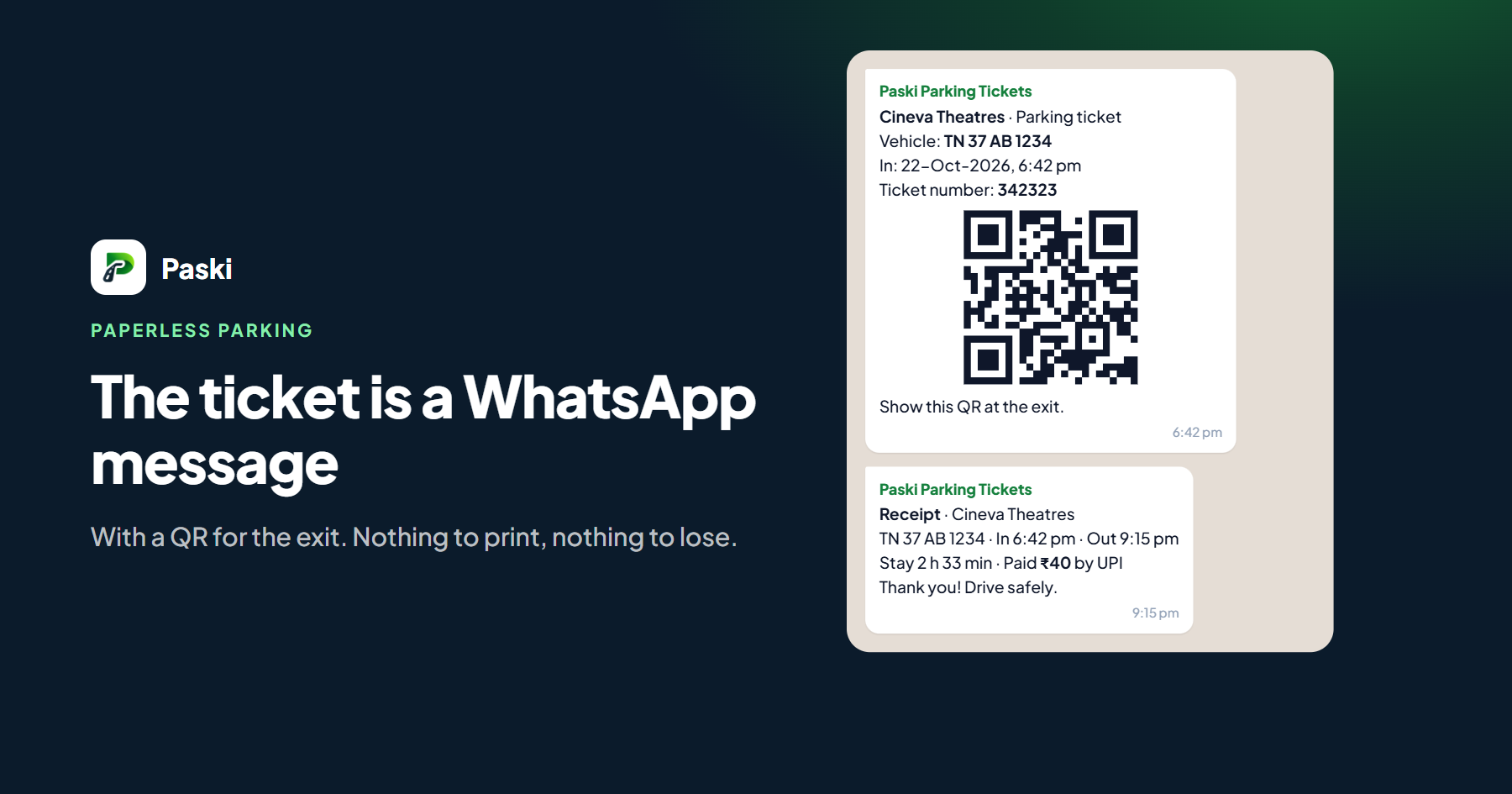
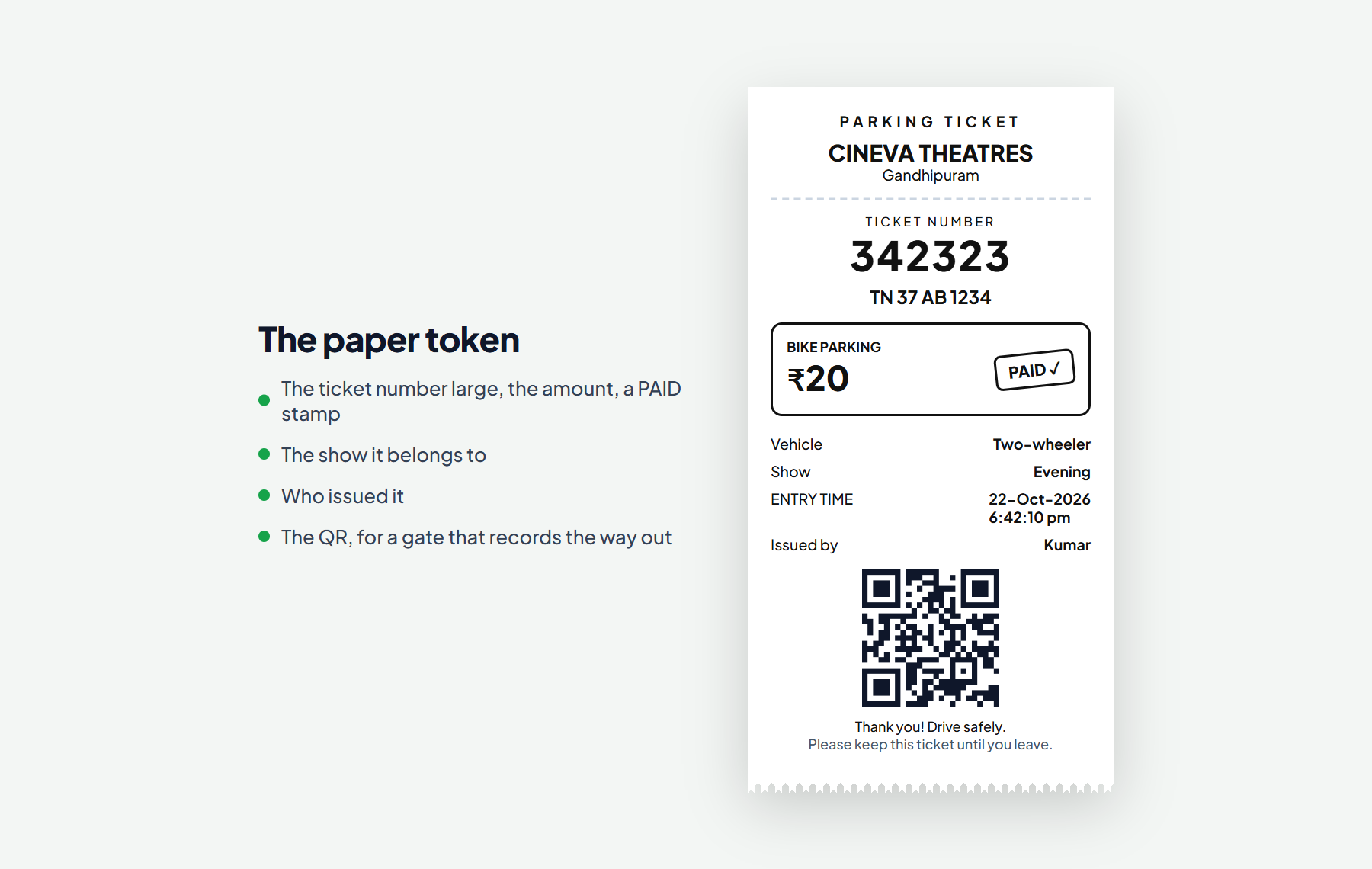
The ticket prints on a Sunmi or iMin handheld as the paper token the vehicle owner is used to, with the ticket number large, the amount, a PAID stamp and the show it belongs to. The manager's own phone can send it on WhatsApp instead, with no printout, for the vehicle owner who wants it on their phone.
Every ticket knows its show
The theatre types its shows once: Morning, Matinee, Evening, Night, with the times. From then on each ticket is tagged by the clock as it is issued, so a vehicle let in at 9:40 pm belongs to the Night show without anyone choosing anything. A vehicle that comes in after midnight for a late show still counts to that night, not to the next morning.
For a big release the theatre adds a dated schedule, five shows for one week say, and it takes over from the regular four for those days only. The attendant can also pick the show by hand on the entry screen when a vehicle comes early for the next one.
The report the manager reads
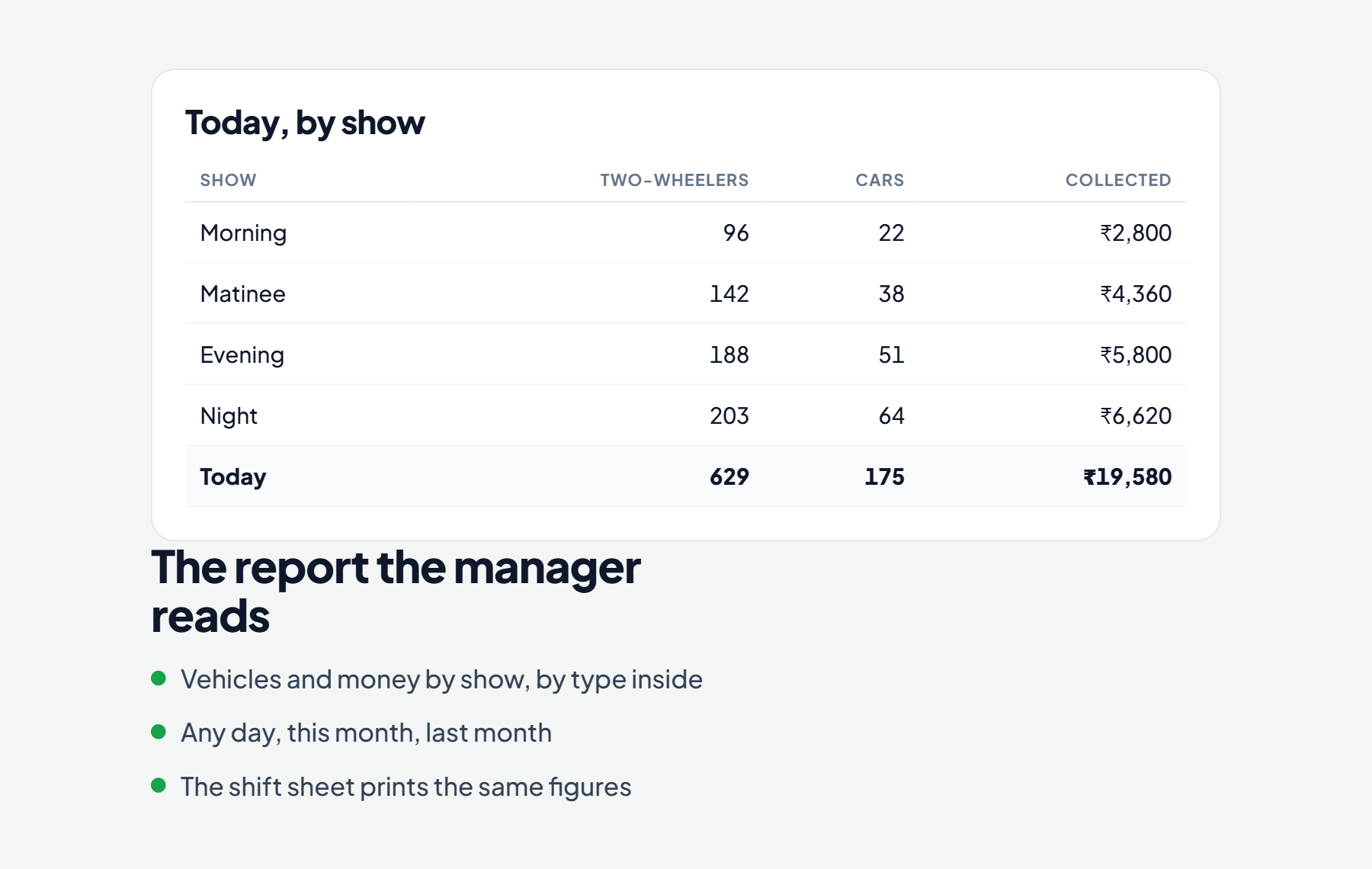
The daily report shows vehicles and money by show, and by vehicle type inside each show: Night show, 180 two-wheelers, 42 cars, so much collected. The shift sheet the attendant hands over with the cash prints the same figures for their shift. Both are there for any day, this month or last month, and the report downloads as a spreadsheet.
- Vehicles and collection by show, by type, for any day or month.
- The attendant's shift sheet with the cash count, printed as the shift closes.
- Who issued each ticket: the staff name is on the paper and in the list.
- Two screens or two cinemas under one owner, opened with one tap from the same app.
Two screens, two names
A theatre that runs two screens or two buildings sets each up as a branch with its own name on the ticket, so the paper says "Cineva Grand Plex" at one gate and "Cineva Theatres" at the other while the owner sees both in one report. Each branch has its own rates and its own staff, up to 15 gate staff a branch.
Prices by the day and the hour
A festival week, a weekend, a night show: each can have its own price. The theatre adds a special rate for the days and hours it applies, and the entry tiles show that price while it runs and go back to the standing price after. The ticket keeps the price it was issued at, so a report never changes under the manager's feet.
Starting
Sign up, choose "Theatre" as the kind of place, and the gate is set up the token way with the regular four shows filled in as a starting point. Change the names and times to yours, add the vehicle types and prices, and the first 15 days are free. A yearly plan is ₹5,000 for each location after that.