At the entry
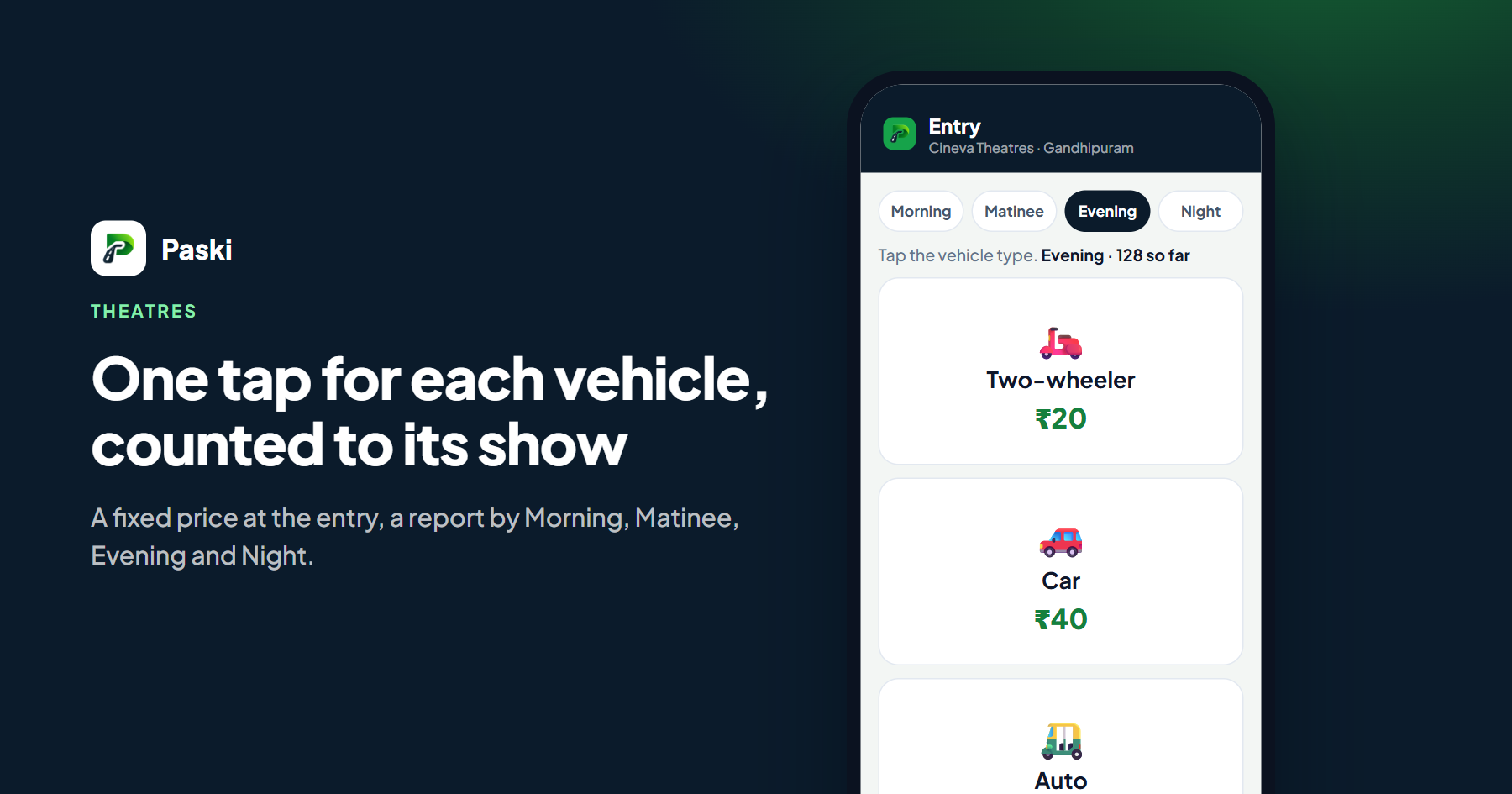
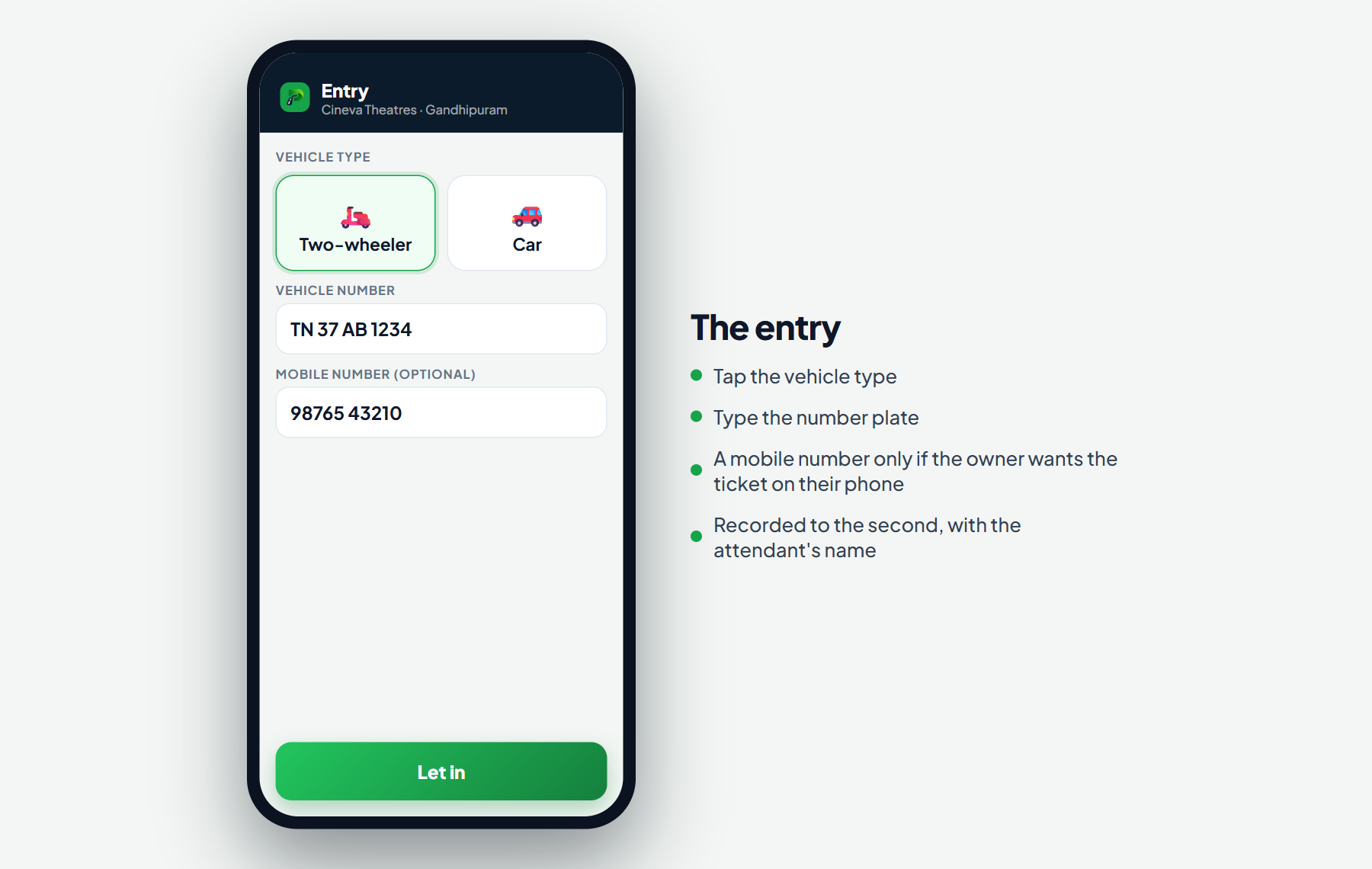
The attendant opens Paski on any Android phone, taps the vehicle type, types the number plate and, if the owner wants the ticket on their phone, their mobile number. That is the whole entry. The ticket is recorded on the server at once, with the time to the second and the name of the attendant who let the vehicle in.
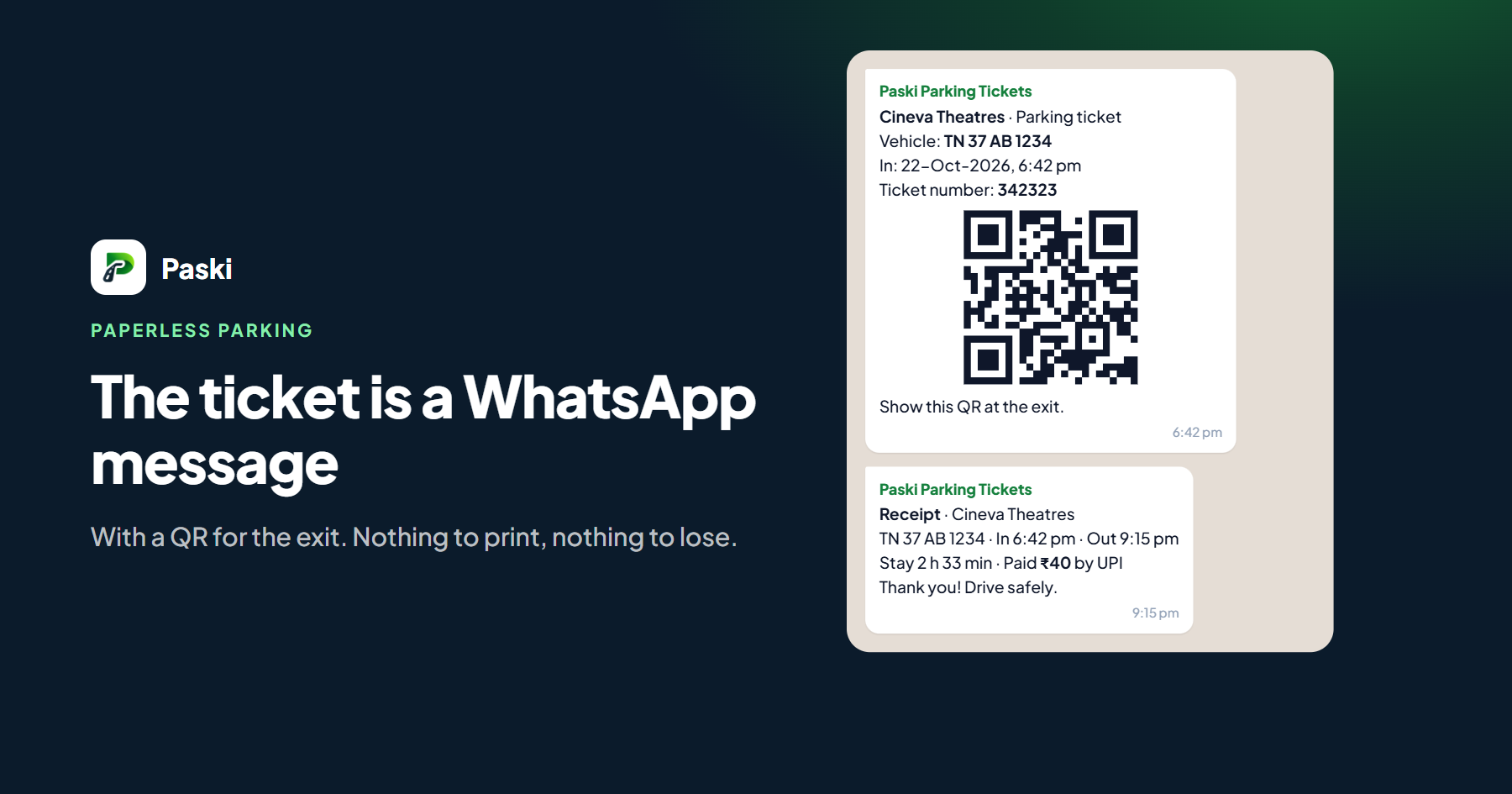
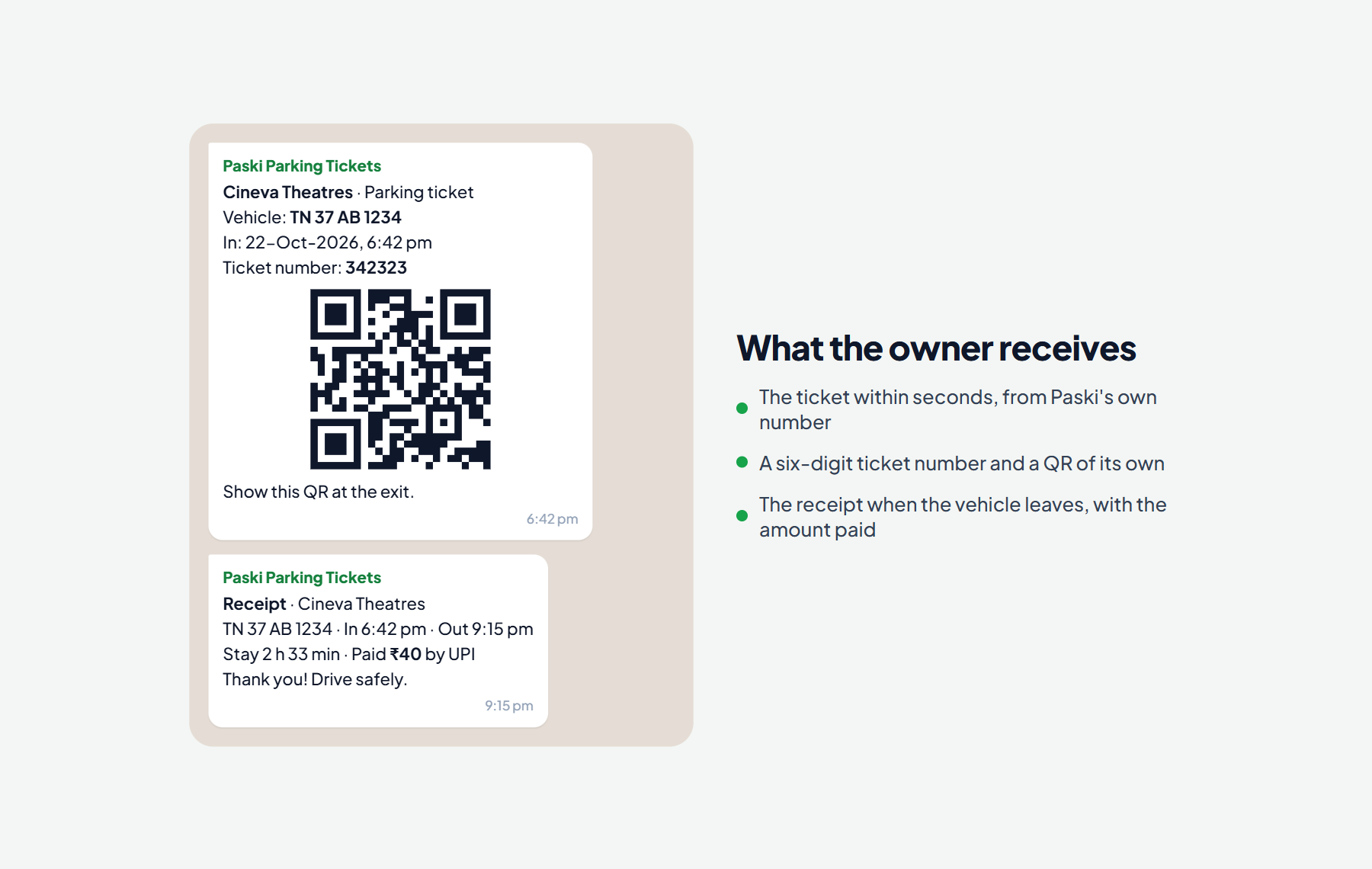
The owner gets a WhatsApp message within a few seconds: the parking name, the vehicle number, the time in, the ticket number and a QR code. The message comes from Paski's own WhatsApp number, so the operator never shares theirs.
A mobile number is optional. A vehicle whose owner gives no number is let in exactly the same way; its number plate is the ticket.
At the exit
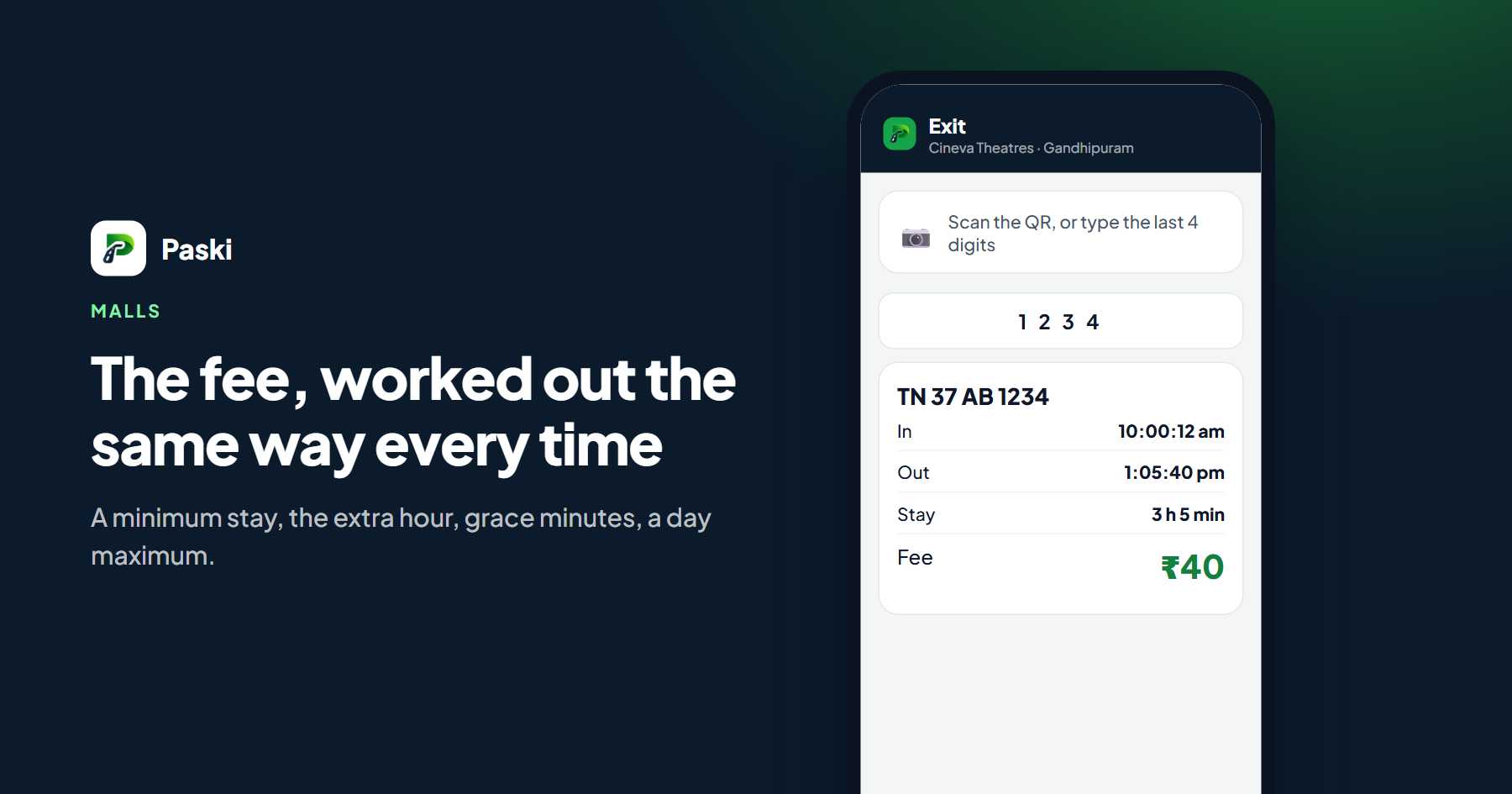
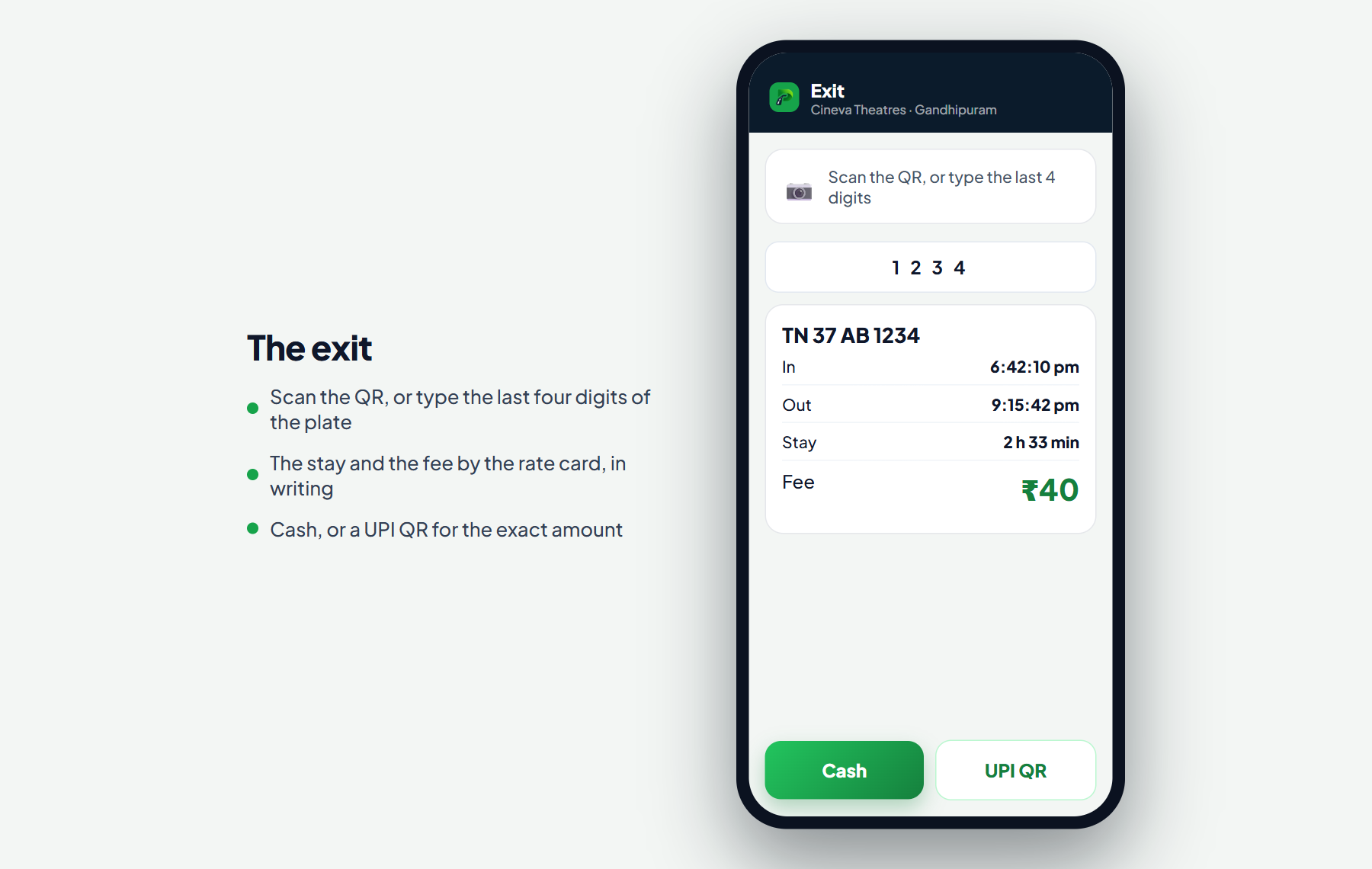
The owner shows the message. The attendant scans the QR with the phone's camera, or types the last four digits of the number plate when there is no phone to show. Paski finds the ticket, works out the stay and shows the fee by the rate card the owner set: a minimum stay, then each extra hour, a day maximum, grace minutes, whatever the gate charges.
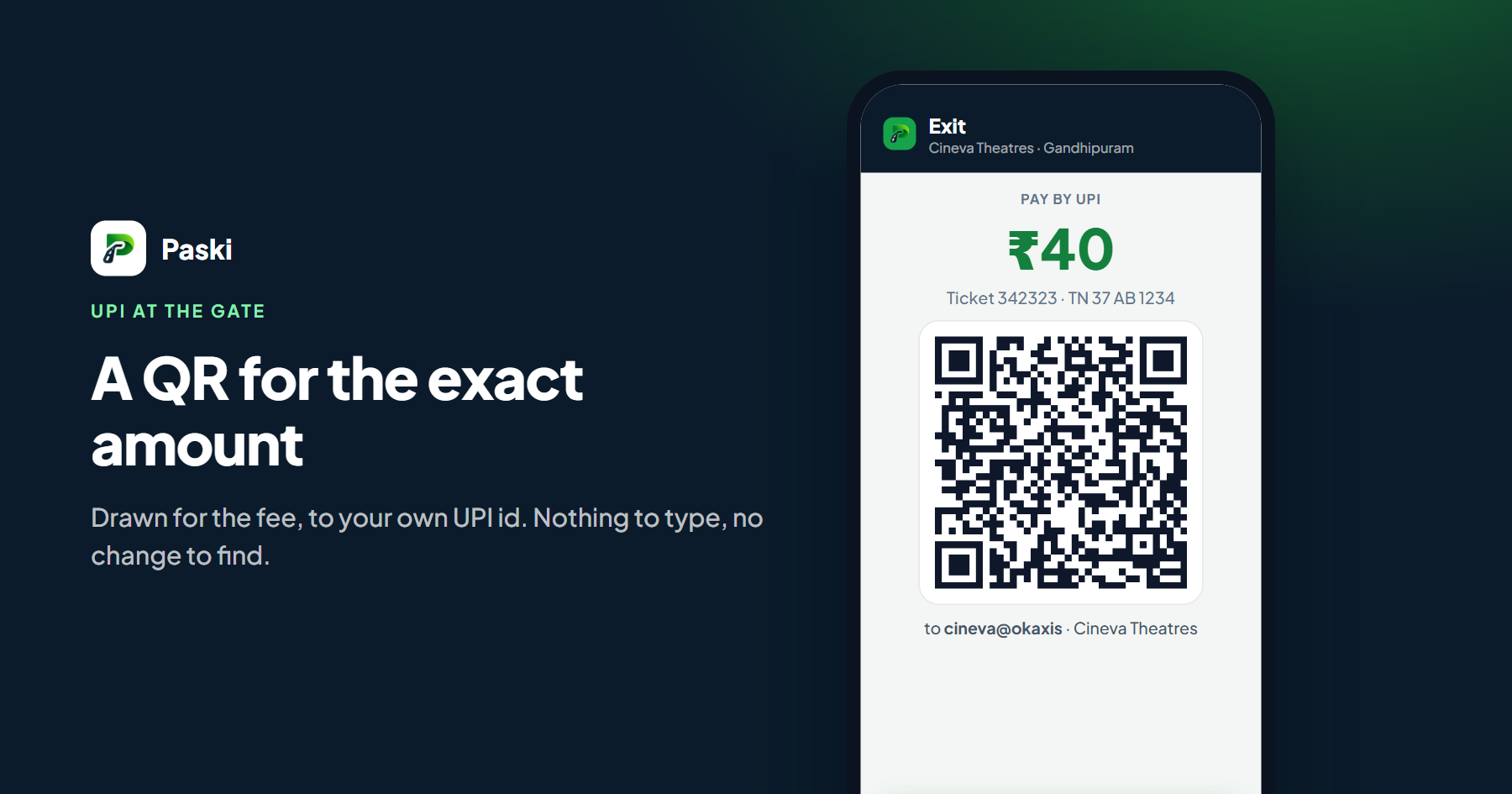
The attendant takes cash, or shows a UPI QR for the exact amount. When the money is in, one tap closes the ticket and the owner gets a receipt on WhatsApp with the amount paid and the time out.
Why the message is the receipt
Every ticket has a six-digit number drawn at random, so one cannot be guessed from the one before it. The QR carries a token of its own, so a screenshot of someone else's ticket does not open the gate for a different vehicle: the number plate on the ticket is checked against the vehicle leaving.
A ticket that has already left cannot be used again. If the same QR is scanned a second time the screen says the vehicle left at such a time, so an attendant who is offered a used ticket sees it at once.
What it costs
Each WhatsApp ticket is charged to the operator's message balance at ₹0.20 a message, and a new account starts with 100 free. The ticket and the receipt are two messages. A gate that does not send messages, a token gate at a theatre for instance, pays nothing for messages at all.
The plan itself is for each parking location: ₹25 a day for an event, ₹500 a month, ₹5,000 a year. Tickets, vehicles and staff devices are not counted.
When paper still makes sense
Printing is an option, never a requirement. A theatre that hands out a token at the entry and collects it at the exit may prefer paper, and a Sunmi or iMin handheld prints the same ticket with the same QR. Many operators run both: paper for the vehicle whose owner has no WhatsApp, the message for everyone else.
- No printer, no paper rolls, no device to buy: any Android phone is the gate.
- The ticket cannot be lost, so the "lost ticket" argument at the exit goes away.
- The owner has the time in and the amount paid in writing, which ends most disputes before they start.
- The operator sees every ticket, every vehicle inside and every rupee taken, live, from anywhere.
Trying it
The free trial is 15 days with everything switched on. Sign up on the website, add a vehicle type and a rate, and let the first vehicle in from your own phone: the WhatsApp message arrives on the number you type.